The Real Difference Between Robot Vacuums and Regular Vacuums
The question isn't really "which is better?" It's "better for what?" Robot vacuums and traditional vacuums solve different problems, and buying the wrong one for your lifestyle is one of the most common and avoidable mistakes in home cleaning. After spending years testing both categories, here's the honest breakdown you need before spending a dollar.
A robot vacuum is an autonomous floor cleaner that navigates your home on a schedule, quietly handling daily dust, pet hair, and debris while you're at work, asleep, or watching TV. A regular vacuum — whether upright, canister, or stick — is a manually operated machine you control directly, typically delivering more raw power and flexibility for deeper, less frequent cleaning sessions.
The best homes often use both. But if you're choosing one, the decision comes down to your floors, your lifestyle, and how you actually clean.
Where Robot Vacuums Genuinely Win
Autonomous Daily Maintenance
This is the killer feature and nothing else comes close. A robot vacuum running on a schedule means your floors are cleaned every single day without any effort from you. For households with pets, kids, or anyone who sheds (so: all of us), daily pickup is the difference between floors that look clean and floors that actually are clean. A traditional vacuum sitting in the closet gets used once or twice a week at best — that's five days of accumulation between cleanings.
Top-tier models like the Roborock S8 MaxV Ultra and the Ecovacs Deebot X2 Omni pair this autonomous cleaning with self-emptying base stations, meaning you can go weeks without touching the machine at all. That's a fundamentally different value proposition than any traditional vacuum can offer.
Navigation and Mapping
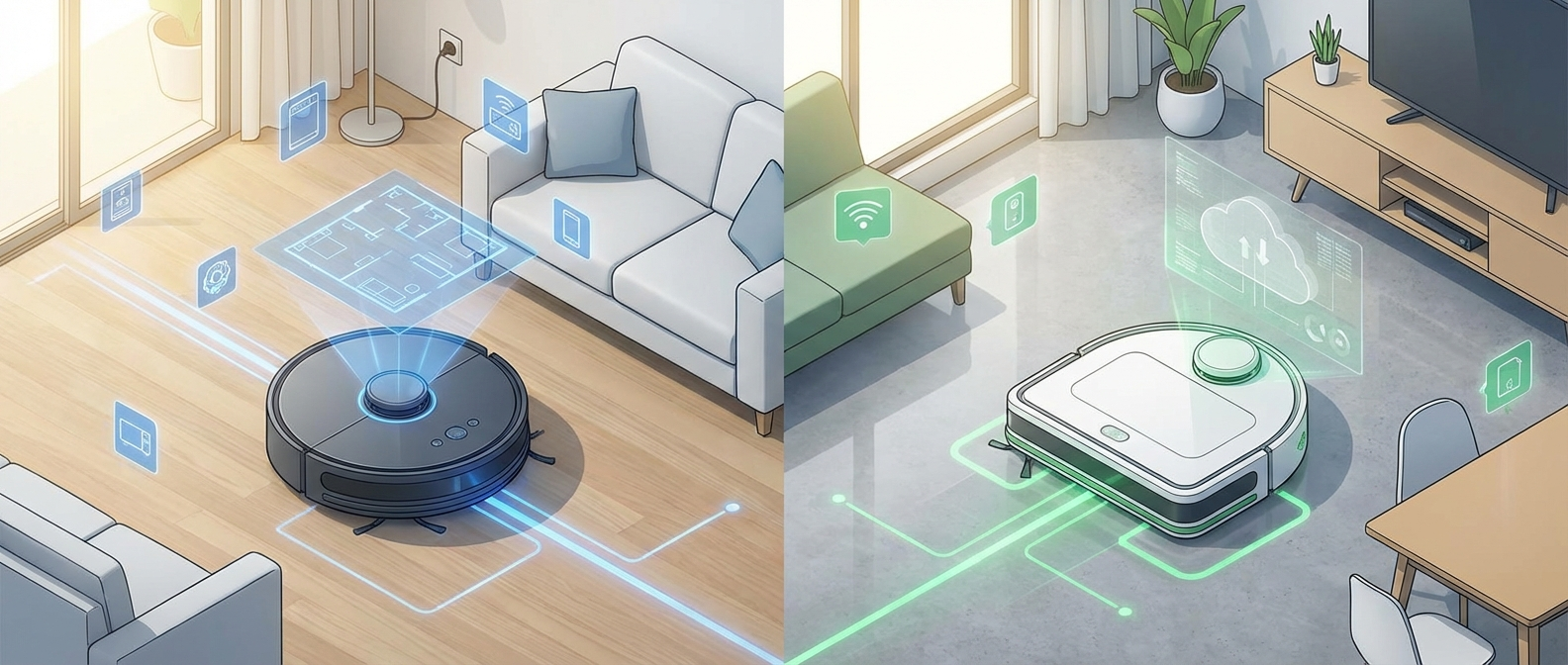
Modern robot vacuums use LiDAR or structured light sensors to build precise floor maps of your home. They remember room layouts, respect virtual no-go zones, and can be directed to clean specific rooms on demand through a smartphone app. The 2026 generation, as reviewed by CNET and PCMag, can now dodge obstacles in real time with AI-powered cameras — avoiding cables, shoes, and even pet waste. The iRobot Roomba Combo j9+, for example, uses PrecisionVision navigation to identify and route around dozens of object types automatically.
No traditional vacuum does any of this. You push it where you want it, and you do the thinking.
Hands-Free Mopping
2-in-1 robot vacuums that vacuum and mop simultaneously have matured significantly. The Ecovacs Deebot X8 Pro Omni — PCMag's top pick for 2026 — features a roller mop with auto-washing and hot-air drying at the base station, so it stays clean between uses. Comparable options like the Narwal Freo X Plus use a triangular mop pad design that applies consistent pressure across hard floors. No upright vacuum offers this. It's not even in the same category.
Where Regular Vacuums Still Have the Edge
Raw Suction Power and Deep Cleaning
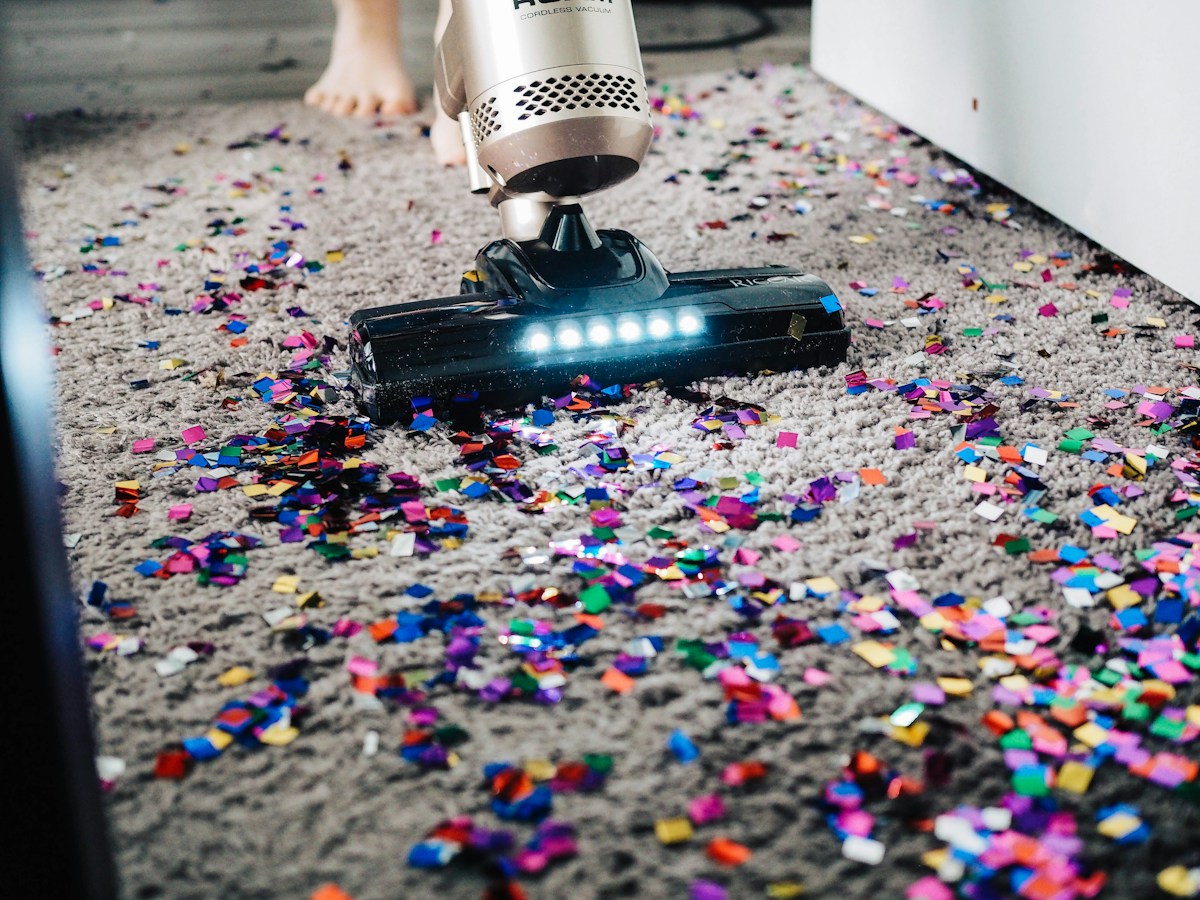
For heavy-duty cleaning — embedded pet hair in thick carpet, post-renovation dust, a bag of flour that just exploded — a traditional upright or canister vacuum is still the superior tool. High-end uprights and stick vacuums routinely outperform robot vacuums on deep carpet cleaning because they combine strong airflow with direct human pressure and agitation. You can push harder into carpet pile, work methodically through a heavily soiled area, and see exactly what you're picking up. Robot vacuums, even premium ones, are optimized for frequent light-to-medium cleaning, not the occasional deep clean.
Newsletter
Get the latest SaaS reviews in your inbox
By subscribing, you agree to receive email updates. Unsubscribe any time. Privacy policy.
Versatility and Reach
A traditional vacuum with a hose and attachments can clean stairs, upholstery, car interiors, curtains, mattresses, and ceiling fans. Robot vacuums clean floors — that's it. If your cleaning needs extend beyond flat surfaces, you'll need a traditional vacuum regardless. This is why the honest answer for most households is "own both" rather than "choose one."
Smaller Upfront Cost
Capable traditional vacuums start around $100, and a solid mid-range upright costs $200–$350. A robot vacuum worth owning — one with LiDAR mapping, decent suction, and reliable navigation — starts at about $300 and climbs to $1,500+ for flagship self-emptying models. The robot premium is real, and for renters, smaller apartments, or budget-conscious buyers, a good stick vacuum often delivers better dollar-for-dollar cleaning performance.
Head-to-Head: Robot Vacuum vs Regular Vacuum
| Category | Robot Vacuum | Regular Vacuum |
|---|---|---|
| Price Range | $200–$1,500+ | $50–$600+ |
| Suction Power (top models) | Up to 18,000 Pa (e.g., 3i G10+) | Typically 400–500 AW (air watts) |
| Dustbin Capacity (onboard) | 300–500ml | 1–3 liters |
| Cleaning Autonomy | Fully autonomous, scheduled | Manual operation required |
| Deep Carpet Cleaning | Moderate | Excellent |
| Hard Floor Maintenance | Excellent (daily automated) | Good (manual) |
| Mopping Capability | Yes (2-in-1 models) | No |
| Stair/Upholstery Cleaning | No | Yes (with attachments) |
| Noise Level | 55–65 dB (typical operation) | 70–80 dB |
| Self-Emptying Option | Yes (premium models) | No |
| Pet Hair Performance | Very good (daily pickup) | Excellent (deep extraction) |
| Works While You're Away | Yes | No |
Which Flooring Type Changes the Calculus
Hardwood and Tile Floors
Robot vacuums shine on hard floors. Dust, crumbs, and pet hair accumulate daily and are trivially easy for a robot vacuum to handle. A robot vacuum running every day on hardwood floors will outperform a traditional vacuum used weekly — not because the robot is more powerful, but because frequency matters more than power on smooth surfaces. If your home is mostly hard floors, a robot vacuum alone can be your primary cleaning device, supplemented by occasional stick vacuum use for edges and corners.
Heavy-Pile Carpet
This is where the calculus shifts. Thick, plush carpet requires strong airflow and direct mechanical agitation to pull embedded debris out of fibers. Most robot vacuums handle low-to-medium pile carpet well, but struggle on shag or very high-pile rugs. If your home has primarily deep carpet, a traditional vacuum should be your primary cleaner, with a robot vacuum serving as a between-session maintenance tool.
Mixed Flooring Homes
Most homes have a mix — hardwood in common areas, carpet in bedrooms — and robot vacuums handle the transition automatically. Models like the Roborock Q Revo MaxV automatically boost suction when crossing onto carpet and can even lift their mop pads to avoid wetting carpeted surfaces. This adaptability makes modern robot vacuums genuinely useful in mixed-flooring homes without manual intervention.
Pet Owners: The Special Case
Pet hair is where robot vacuums make their strongest case for primary-vacuum status. Dogs and cats shed continuously, and daily robot vacuum runs prevent hair from accumulating into mats, clumping in corners, or embedding into rugs. For single-pet households on hard floors, a capable robot vacuum with a self-emptying dock handles 90% of pet hair cleanup without you lifting a finger.
For multi-pet homes or homes with heavy shedders, the combination approach wins: a robot vacuum for daily maintenance, and a traditional vacuum for weekly or biweekly deep cleaning of carpets and upholstery. Models like the Shark Matrix Plus are specifically engineered for pet hair with tangle-free brush rolls that prevent hair wrap — a genuine quality-of-life improvement over standard brushrolls.
One caveat Mashable's research underscores: self-emptying robot vacuums are particularly valuable for pet owners. An onboard dustbin fills fast with pet hair, and a robot that stops mid-clean to signal a full bin defeats the purpose of automation. A self-emptying dock solves this by automatically transferring contents to a larger bag — typically good for 30–60 days before you need to do anything.
The Bottom Line: Who Should Buy Which
Buy a Robot Vacuum If:
- You want floors cleaned daily with zero effort
- You have pets that shed regularly
- Your home is primarily hard floors or low-pile carpet
- You travel frequently or work long hours
- You want automated mopping as part of your cleaning routine
- You're comfortable spending $400+ for a genuinely capable machine
Stick With a Traditional Vacuum If:
- You have heavy-pile carpet as your primary flooring
- You need to clean stairs, upholstery, or cars regularly
- Your budget is under $300
- You live in a small apartment where a robot vacuum's navigation advantages don't matter
- You prefer direct control and immediate feedback when cleaning
Buy Both If:
- You have a large home with mixed flooring
- You have multiple pets
- You want both autonomous maintenance and the ability to deep clean on demand
The reality that years of robot vacuum testing confirms is this: the best robot vacuums available today — from the Ecovacs Deebot T30S Combo to the Samsung Bespoke Jet Bot Combo AI — are not toys or novelties. They are legitimate, capable cleaning machines that outperform traditional vacuums in the specific task of keeping floors consistently clean over time. But they don't replace the deep-cleaning power of a good upright for heavy-duty jobs. Use that distinction to make the right choice for your home, and you'll end up with cleaner floors and less effort regardless of which direction you go.